ISAC System Design Aspects
ISAC System design is influenced by the following aspects:
ISAC System Architecture
ISAC Use-cases and Applications
How these aspects influence the design of ISAC system will be covered in the following sections. The details of ISAC system architecture, use-cases and applications, and KPIs are covered in separate sections.
ISAC System Architecture
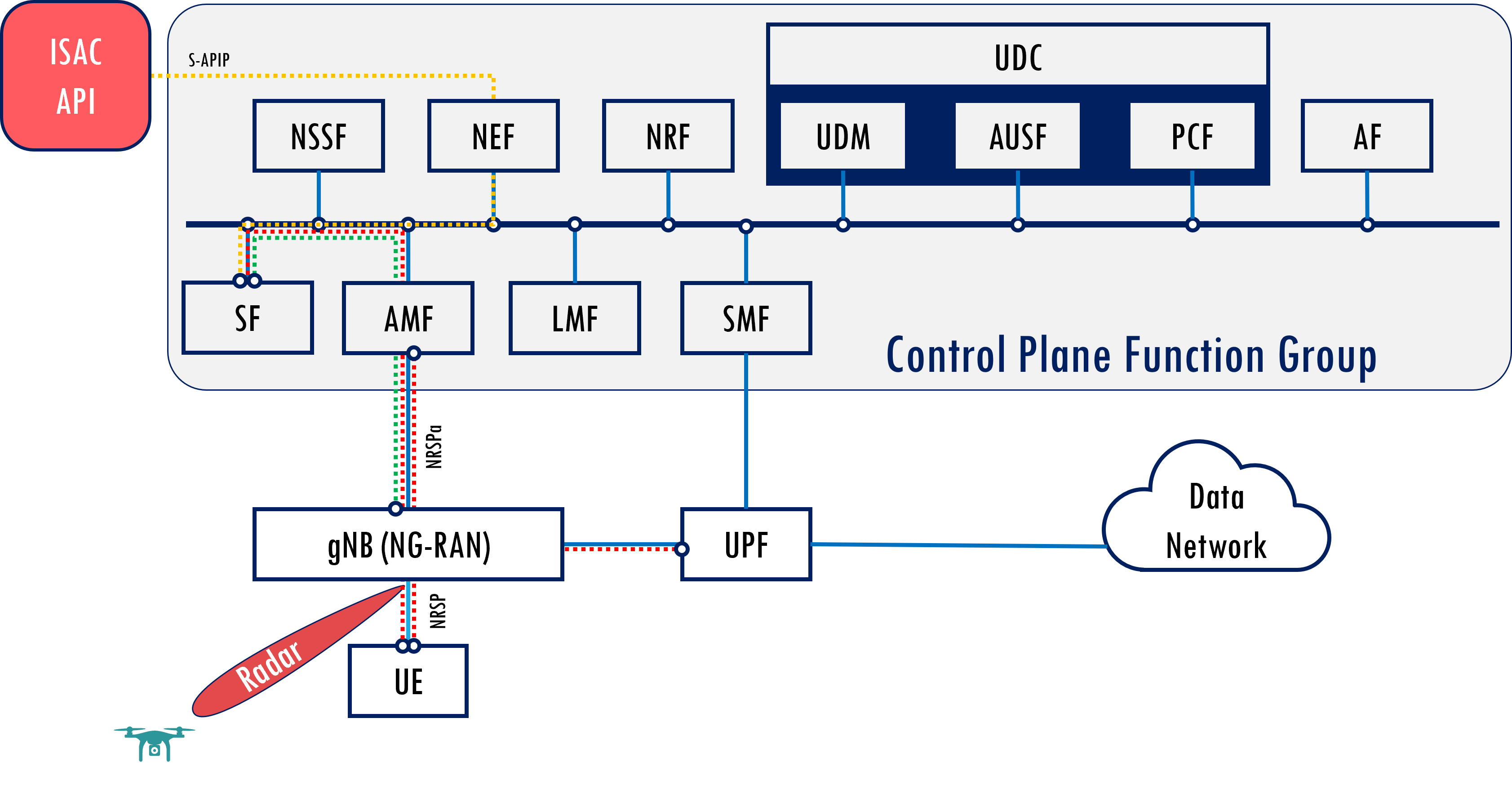
The ISAC system architecture defines the overall structure of the ISAC system, including the components, interfaces, and protocols along with the functional blocks and their interactions. The system architecture enable variations crucial features of technology, such as:
Scope of Integration between the communication and sensing functionalities
The level of centralization of the processing of communication and sensing functionalities
Scope for fusion of measurements and information collected from different sensing and communication nodes
The entities (UEs, base-station and other units) that can be involved in sensing and communication functionalities
The level of flexibility and adaptability of the system to support different use-cases and applications
The level of complexity and cost of the system
ISAC Use-cases and Applications
If the use-cases and application of ISAC demands very strict KPIs then the architecture will need to support a very sofisticated and complex design which might require collaboration between multiple modes and might require the centralized processing with a need to collect rich sensing measurements. On the other hand, if the use-cases and application of ISAC demands very relaxed KPIs then the architecture can be very simple and might not require collaboration between multiple modes and might not require the centralized processing with a need to collect rich sensing measurements.
ISAC Architecure in 5G and 6G might look as follows: